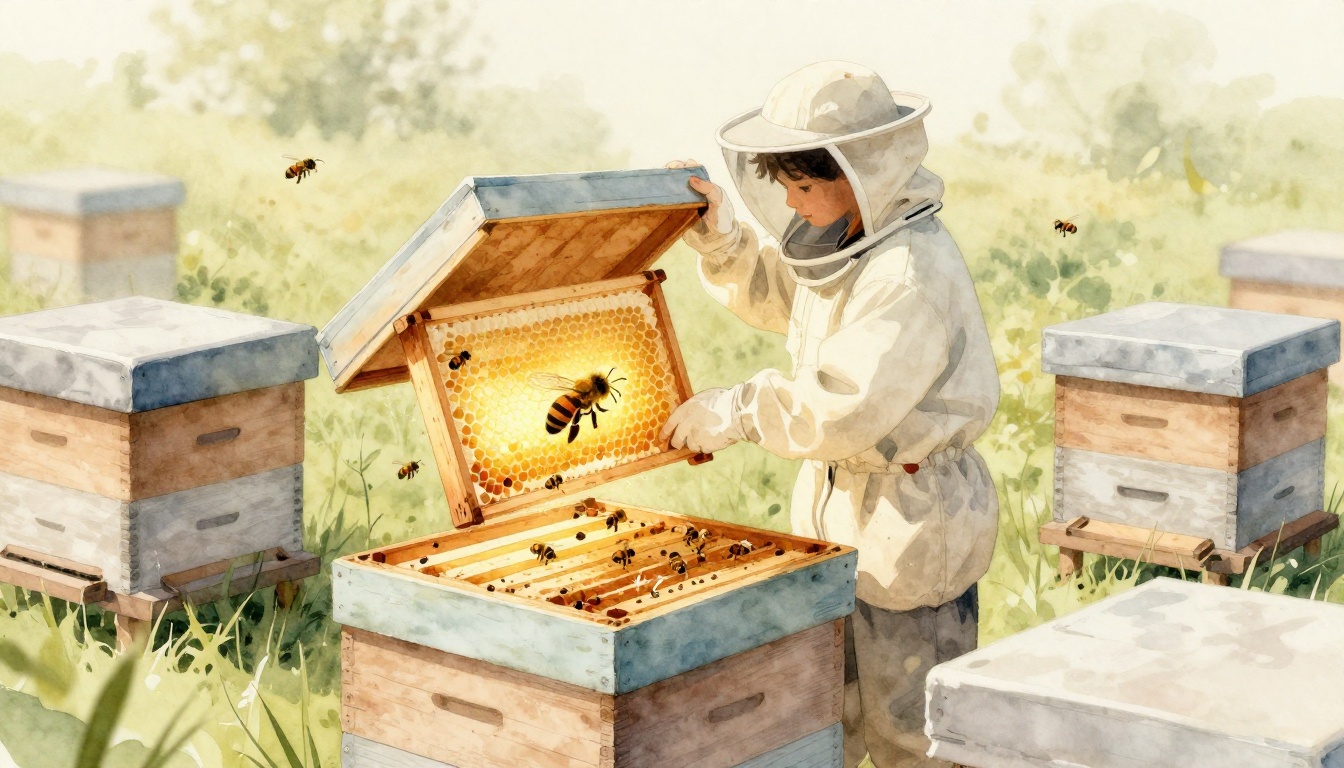
Picture this. You suit up for your first hive check as a new beekeeper. Bees hum around the entrance. Your hands shake a bit. You lift the lid and spot a fat queen strolling across a frame. Relief washes over you. That simple peek shows your colony thrives.
These 10-minute hive inspections work wonders for beginners. They catch problems early. You save time and avoid long sessions that stress the bees. No need for hours of work. Just quick looks build your confidence fast.
In this guide, you learn everything step by step. Start with basic tools and smart timing. Follow an easy routine for a standard Langstroth hive. Spot healthy signs and red flags. Finally, record notes for better results next time. Ready to master your beginner hive inspection? Let’s dive in and make it simple.
Gather Simple Tools and Pick the Best Time to Start
Minimal gear keeps your checks fast. Beginners benefit most from a light kit. You finish in under 10 minutes without hassle. Focus on essentials that calm bees and protect you.
Prep sets the tone. Walk slow to the hive. Bees sense rushed moves. In April, like now in spring 2026, check weekly during buildup. Bees expand fast then. Cold weather chills brood, so wait for warmth.
Budget stays low. Get starter tools for under $50 total. They last years with care. Clean them after each use. Dirt spreads disease. Store in a small box near your hives.
Essential Gear That Fits in a Small Kit
A smoker calms bees with cool smoke. Light pine needles or burlap. Puff two or three times at the entrance.
The hive tool pries lids and frames loose. Its hooked end clears propolis. J-hook it under edges for leverage.
Wear a veil and gloves for safety. Light cotton gloves let you feel frames. A jacket with veil works fine for starters.
Grab a bee brush too. It sweeps bees gentle off covers. Soft bristles prevent squishing.
Keep a notepad handy. Jot queen sightings or issues quick. Optional queen finder frames help spot her later.
This setup weighs little. You carry it in one hand. Speed comes from simplicity.
Weather and Timing Secrets for Stress-Free Checks
Pick days over 60 degrees Fahrenheit. Bees fly free then. Guards stay calm inside.
Aim for midday. Foragers leave, so fewer bees guard. Sunny skies beat clouds. Wind under 10 miles per hour keeps smoke steady.
Skip rain or chill. Wet bees cluster tight. Cold slows them down. You risk harming brood.
Spring needs checks every seven days. Summer drops to 10-14 days. Winter skips inspections.
Before you start, scan the yard. Tell family you check hives. Phone stays in pocket for calls. Approach from the side. Bees face forward.
These choices cut stress for you and bees. Success follows good prep.
Follow This Easy 10-Minute Step-by-Step Routine
Now you stand ready. Hive hums steady. Your timer starts. Stay gentle. Use little smoke. Observe more than you touch.
Limit to four or six frames. This keeps brood warm. Work from the end inward. Replace in reverse order. Total time stays under 10 minutes.
Breathe steady. Bees match your calm. Next, lift steady.
Minutes 1-2: Smoke Lightly and Lift the Lid
Puff two light smokes at the entrance. Wait 30 seconds. Smoke rises slow.
Take your hive tool. Pry the lid from back first. Lift straight up. Set it clean side down nearby.
Brush bees off the inner cover gentle. Remove it. Check for burr comb buildup. Scrape if needed, but quick.
Light stays in. You see clear now.
Minutes 3-6: Scan Brood Frames for Life and Queen
Pull the end frame first. Hold it above the hive. Look for eggs like rice grains. Larvae curl C-shaped in cells.
Capped brood shines like peanut shells. Patterns fill the center. Spot the queen? She stands longer, abdomen wide.
Check stores too. Pollen packs edges. Honey caps light. Shake excess bees off. Or brush them down.
Inspect three to five frames max. See activity? Workers tend brood. Return frames reverse. No gaps.
Queen right means colony strong.
Minutes 7-8: Quick Glance at Honey Supers and Pests
Supers on top? Tilt the box slight. Check fill level. Frames three-quarters full need space soon.
Scan bees for mites. Look at drone pupae bottoms. Tiny brown dots spell trouble.
Peek for foulbrood. Ropy larvae pull like glue. Small hive beetles hide in cracks.
No deep pull. Just tilt and look. Note issues for later.
Minutes 9-10: Close Up Tight and Step Back
Replace inner cover flat. Lid snaps firm. No cracks for robbers.
Puff one more smoke if bees buzz mad. Step back 10 feet.
Watch the entrance one minute. Bees fly normal? Good sign. Return gear clean.
Done. Hive secure again.
Spot Healthy Hive Signs and Catch Trouble Early
Your eyes train fast with practice. Success shows in clear patterns. Trouble hides in gaps.
Link these to your steps. Eggs mean laying queen. Even caps show steady growth.
Snap photos on your phone. Review later. Builds skills without doubt.
A hive inspection checklist for beginners boils down to patterns and pests.
Green Flags: Proof Your Bees Are Happy and Strong
Eggs appear every two or three days. Fresh starts cycle.
Brood caps even and flat. No shot-gun look.
Queen cells stay rare. One or none means no swarm plan.
Stores pack top and bottom frames. Pollen colors vary. Honey space grows.
Bees move purpose full. Workers fan or dance.
Propolis seals light. No big mess blocks frames.
These prove strength.
Red Flags: Act Fast on These Warning Signs
Spotty brood skips cells. Queen fails or disease hits.
Varroa mites cling brown. Check drone brood close.
Chalkbrood mummies pepper white. Fungus loves damp.
Hungry bees rob stores bare.
No eggs spell queenless. Look three days.
Queen cups point up? Swarm prep starts.
Fix simple. Feed syrup. Treat mites with strips. Call a mentor for brood woes.
Act quick saves hives.
Record Your Findings and Plan for Next Time
Notes turn checks into wins. Use a notebook or app. Date each entry.
Log weather first. Note queen seen, yes or no. Count brood frames. Honey frames too.
Sample: April 15, 2026. 65F sunny. Queen yes. 5 brood, 3 honey. Mites few.
Review patterns. Feed if stores low. Add supers at 80 percent full.
Schedule next check. Peak season every seven to 10 days. Slow times stretch to two weeks.
Adjust plans. Swarm signs? Split soon.
This habit builds bumper crops. Your hives thrive long term.
Master these quick routines, and beekeeping feels natural. You spot issues before they grow. Confidence grows with each check.
Grab your tools this weekend. Run a 10-minute hive inspection. Share your first finds in the comments. What green flag surprised you most?
Healthy hives mean sweet honey rewards. You got this.