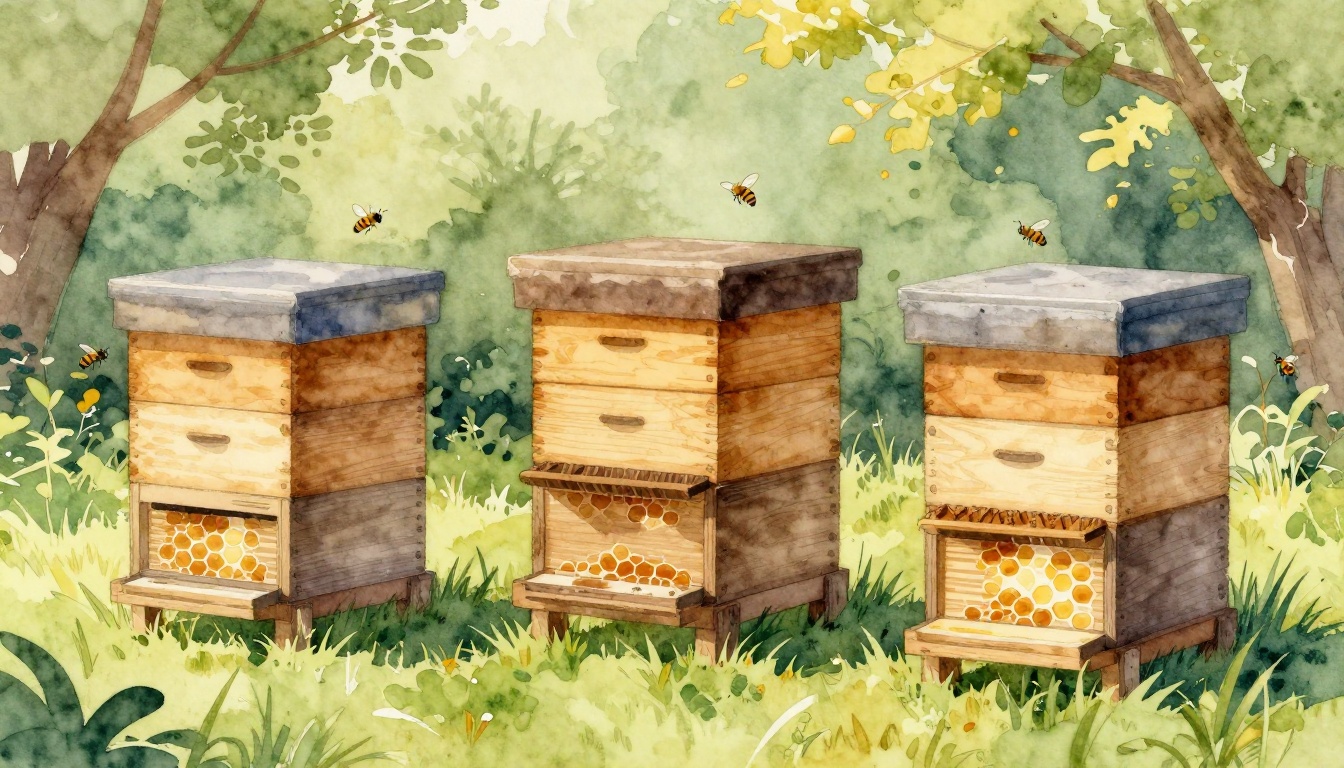
Backyard beekeeping surges in popularity this spring of 2026. More people start hives amid rising food costs and a push for local honey. You face a big decision early: Langstroth, Top Bar, or Warre hive.
Each system offers unique perks. Langstroth uses frames for easy checks. Top Bar lets bees build natural comb sideways. Warre stacks boxes like tree homes from below. Your pick affects work, costs, yields, and bee health. Which hive matches your goals? Let’s break down the options step by step.
Discover What Sets Langstroth, Top Bar, and Warre Hives Apart
These hives differ in design and bee treatment. Langstroth rules commercial setups. Top Bar and Warre appeal to naturalists. Each copies nature a bit differently. Rev. Lorenzo Langstroth invented the frame system in 1851. Naturalists shaped Top Bar over decades. Abbé Émile Warre created his stackable boxes in the 1940s. You gain a solid base here for smart choices.
Langstroth Hives: Movable Frames for Easy Management
Bees fill Langstroth hives in stacked boxes. Removable frames hold wax foundation. Workers build straight comb on it. You add supers for honey above a queen excluder. This keeps brood separate.
The design hinges on bee space, about 3/8 inch. Frames slide without crushing bees. Common sizes include 10-frame or 8-frame mediums. Inspections happen often. You lift boxes to check for diseases or swarms.
Commercial beekeepers love this setup. It scales well. Hobbyists buy kits ready to go. Bees adapt fast because frames mimic orderly nests.
Top Bar Hives: Horizontal Design for Natural Comb
Top Bar hives run long and low. Bees hang comb from wooden bars. No frames mean freeform builds downward. Workers choose cell sizes naturally.
Kenyan Top Bar style leads the pack. It fits 28 bars in a slanted box. You harvest by cutting comb. Less lifting disturbs bees.
Build one from scrap wood easily. It suits small yards. Bees prop comb less because angles prevent sticking. You peek under covers for quick views.
This system feels wilder. Bees cluster like in logs. Minimal tools keep it simple.
Warre Hives: Stackable Boxes Mimicking Tree Hollows
Warre hives stack vertically like hollow trees. Small boxes hold top bars for comb. You add new ones from below as bees fill up.
A quilt box on top wicks moisture. No frames or foundation. Bees draw natural wax.
Warre called it hands-off beekeeping. Inspections stay rare. Lift the top for a peek only. Smaller boxes cut swarming urges.
Wood construction stays basic. It promotes deep brood nests. Bees stay calm with little fuss.
Head-to-Head: How They Compare on the Factors That Matter Most
Key factors decide your hive. Think time, money, honey, health, and space. Real beekeepers report patterns. Langstroth excels in yields. Top Bar and Warre save effort. Here’s a quick side-by-side view.
| Factor | Langstroth | Top Bar | Warre |
|---|---|---|---|
| Weekly Work | 30-60 min inspections | 10-20 min peeks | Under 10 min |
| Startup Cost (2026) | $250-450 | $100-200 (DIY) | $150-300 |
| Annual Honey (lbs) | 40-80 | 20-50 | 15-40 |
| Beginner Ease | High | Medium | Low |
| Winter Survival Rate | 80-90% (with help) | 85-95% | 90%+ |
Langstroth demands more but pays off. Natural hives trade volume for peace. Pick based on your routine.
Ease of Inspection and Maintenance
Langstroth shines here. Pull frames anytime. Spot varroa mites fast. Feed syrup through holes.
Top Bar needs cuts for full views. Comb breaks easier. Still, you check less often.
Warre limits peeks to the top. Bees seal lower boxes. Trust them more. Feed outside if needed.
Beginners prefer Langstroth. It teaches hive signs. Experienced keepers go natural.
Initial Costs and Long-Term Expenses
Kits cost most for Langstroth. Frames, foundation, and tools add up. Expect $300 average now.
Top Bar stays cheap. Buy plans or build. Bars cost pennies.
Warre falls in between. Wood boxes stack simple. No extras like extractors.
Long-term, Langstroth replaces frames yearly. Natural hives last longer with less buy-in.
Honey Production and Harvesting Simplicity
Langstroth tops yields. Spin frames in extractors. Get clear honey fast.
Top Bar crushes comb. Strain it yourself. Yields drop but taste shines.
Warre cuts full combs. Sell as-is or crush. Lower output fits small needs.
All start slow year one. Location boosts all by 20 pounds.
Bee Health and Naturalness
Top Bar and Warre feel natural. Bees set cell sizes. Fewer chemicals needed.
Langstroth allows treatments. Frames spread diseases if sloppy. Good care matches survival rates.
Overwintering favors naturals in cold spots. Insulation helps all.
Space Requirements and Scalability
Langstroth stacks tall. Eight-frame saves room. Scales to dozens.
Top Bar spreads wide. One hive takes porch space.
Warre stays short until full. Fits balconies.
Urban spots pick compact. Rural yards expand easy.
Match the Perfect Hive to Your Needs and Experience
Assess your setup first. How much time weekly? Budget cap? Honey goals? Space limits? Trends lean natural in 2026. Still, match your life. Consider hybrids like framed Top Bars.
Best Choice for Beginner Beekeepers
Start with Langstroth. Learn inspections hands-on. Clubs offer 10-frame starters.
Top Bar works next. Simple but teaches patience.
Skip Warre at first. Rare checks hide mistakes.
Top Pick for Backyard Hobbyists with Limited Space
Warre fits tight spots. Low height blends in.
Try 8-frame Langstroth. Or short Top Bar.
Place near fences. Screens cut neighbor buzz.
Ideal for Hands-Off Natural Beekeepers
Warre leads. Add boxes below and wait.
Top Bar ties close. Side views stay calm.
Both build trust in bees.
Go-To for High-Yield Honey Producers
Langstroth wins big. Multiple supers pack pounds.
Scale to five hives. Extractors speed sales.
No perfect fit exists. List your top needs. Weigh pros against your yard and schedule.
Your backyard buzz starts soon. Grab a starter kit from a local supplier. Join a bee club for tips. Share your pick in comments. What hive calls to you? Your bees wait ready to thrive.