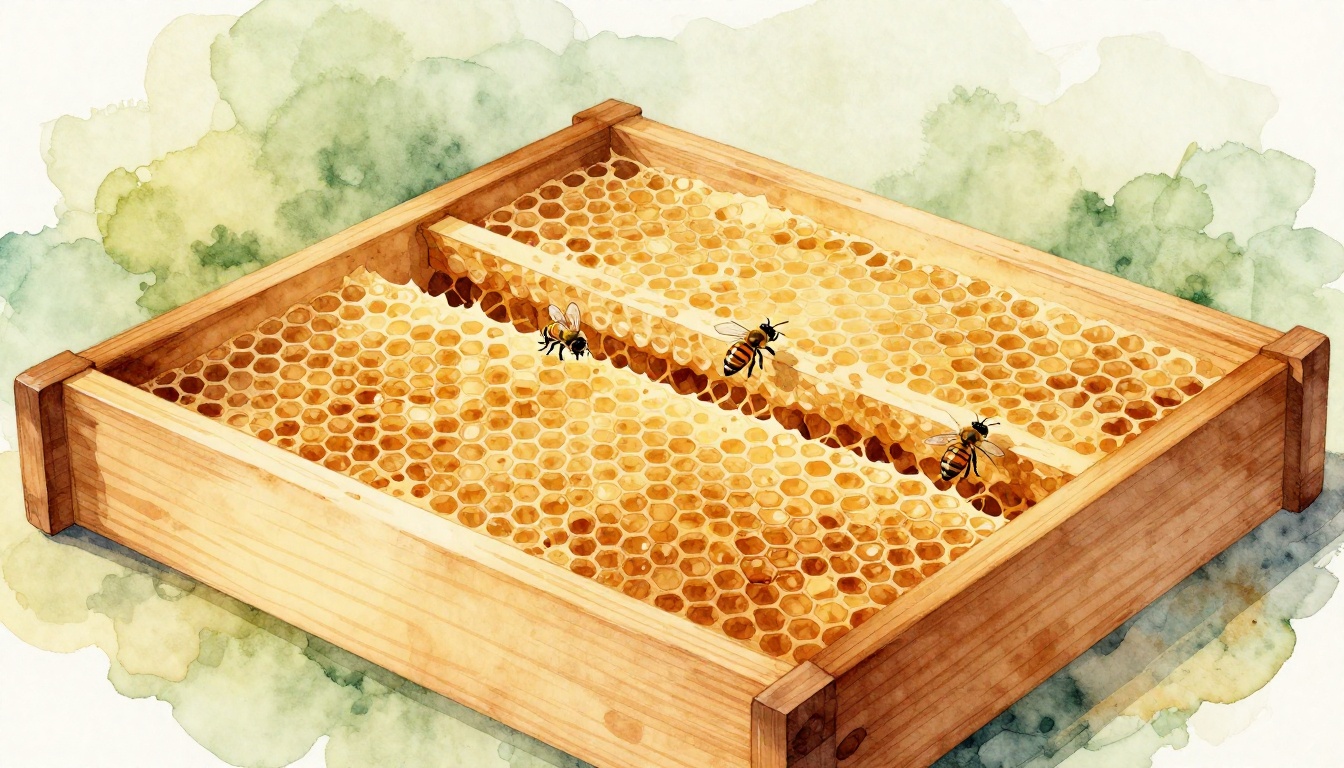
Bees craft their hives with stunning precision. They leave exact gaps between combs, almost like they follow a blueprint. That gap, known as bee space, measures about 3/8 inch. It’s the sweet spot that stops bees from gluing frames with propolis or filling voids with extra comb.
Humans copied this trick for modern beekeeping. Without it, hives turn chaotic. Frames stick, inspections drag, and colonies struggle. Yet, get bee space right, and you unlock healthier bees and bumper honey crops.
This post uncovers the story behind bee space. You’ll learn Rev. Langstroth’s breakthrough, the bee biology that demands it, how to build hives around it, and fixes for common slip-ups. Understanding this one measurement transforms beekeeping from guesswork to science. Let’s explore why 3/8 inch rules hive design.
How Rev. Langstroth Discovered Bee Space
Rev. Lorenzo Langstroth changed beekeeping forever. In 1851, frustration led to genius. He battled sticky hives for years. Bees filled his skeps with irregular comb. Harvesting meant destruction.
One fall day, Langstroth noticed something odd. He measured gaps in a hive after scraping it clean. Bees always rebuilt combs with consistent spacing. That space hovered around 3/8 inch. Smaller gaps got sealed with propolis, their glue. Larger ones sprouted brace comb, wild bridges of wax.
Excited, he tested it. Langstroth built frames with exact spacers. Bees respected the gap. No more mess. He called it the “bee’s own standard.” His 1853 book, The Hive and the Honey Bee, spread the word. Beekeepers ditched fixed-comb skeps for movable frames. Yields soared. Colonies thrived.
This “aha” moment birthed the Langstroth hive. It scaled beekeeping worldwide. Farmers went from destroying hives yearly to pulling honey anytime.
Langstroth’s Key Experiments
Langstroth started simple. He visited wild colonies in hollow trees. There, he measured natural comb spacings. Gaps varied little, always near 3/8 inch.
Next, he tinkered in his apiary. He tried 1/4-inch gaps first. Bees filled them solid with propolis. No passage. Then 1/2-inch spaces. Bees built burr comb across them. Chaos returned.
He settled on 3/8 inch, or 9.5 mm. Bees walked freely. They cleaned without issue. Wax stayed put on frames.
Langstroth noted patterns. Workers patrolled the space. Queens laid eggs precisely. Foragers passed food through it. His logs proved the point. One right size ruled them all.
The Bee Biology That Makes 3/8 Inch Perfect
Bees evolved for this gap. Their bodies fit it perfectly. Instincts kick in to maintain it. Stray from 3/8 inch, and trouble brews.
Worker bees measure about 3/8 inch across the head. They squeeze through narrower spots but prefer room. This space lets them groom, feed larvae, and remove trash. Without it, hives clog.
Propolis seals cracks smaller than that. Bees hate drafts or invaders. Larger voids invite extra comb for storage or traffic. The gap balances order and flow.
Modern studies confirm it. Apiarists track bee traffic with videos. Bees cluster efficiently in bee space. Pheromones spread evenly. Hygiene stays sharp.
Think of it like personal space in a crowd. Too tight, folks push. Too loose, groups scatter. Bees demand their zone.
Bee Anatomy Meets Hive Geometry
Worker bee heads span 3/8 inch. Legs span the same for grip. They navigate combs side by side.
In the gap, they perform tasks. Nurses feed grubs. Guards patrol edges. Foragers drop pollen loads.
Queens navigate too. Her abdomen fits snugly. She lays one egg per cell without waste.
This match arose over millions of years. Bees sculpt wax to suit their form. Humans just measure and mimic.
Ventilation and Heat Control Secrets
Bee space aids airflow. In summer, workers fan wings. Gaps channel cool air inside.
Hives hit 95 degrees for brood. Space prevents hot spots. Bees cluster tight in winter. Gaps trap warmth without sealing.
Poor spacing blocks breeze. Colonies overheat. Honey turns runny. Yields drop 20 percent in bad years.
Bees sense it. They adjust comb if gaps stray. Smart design keeps them humming.

Building Hives Around Bee Space Principles
Bee space shapes every hive part. Frames, boxes, entrances all honor it. Langstroth hives lead the pack.
Standard frames use 1 3/8-inch end bars. Subtract two combs, and bee space fits. Supers stack without gaps. Bees focus on honey, not fixes.
Modern tweaks help. Hoffman frames self-space with wider ends. They snap in place. Standard ones need side bars for precision.
DIY folks adjust old gear. Add washers to bolts for exact gaps. Results beat factory flaws.
Benefits pile up. Inspections take minutes. Propolis stays minimal. Harvests extract clean.
Other designs nod to bee space too. Top-bar hives let bees set spacings. Warre stacks mimic trees.
Langstroth Hives: The Gold Standard
These hives shine for scale. Ten-frame boxes hold pounds of honey. Eight-frame versions suit backyards.
Frames slide out easy. Centrifuges spin honey free. Bees rebuild fast.
Pros include uniformity. Buy gear anywhere. Swap parts between hives. Beginners succeed quick.
Adapting Bee Space in Other Hive Designs
Top-bar hives run horizontal. Bees build natural combs. Space varies slightly, around 3/8 inch.
Warre hives stack vertically. No frames. Bees draw down. Gaps form organically.
Horizontal suits hands-off keepers. Less lifting. Yields lower, but pure honey flows.
Natural systems cut propolis work. Yet, inspections challenge newbies. Cross comb binds bars.
Choose based on goals. Langstroth wins for control.
Mistakes That Mess Up Bee Space and Fixes
Even pros slip. Uneven frames squash space. New boxes warp. Propolis builds slow.
Symptoms scream trouble. Frames glue tight. You pry for ages. Cross comb spiders across.
Stats show impact. Twenty percent of hives fail from poor spacing. Colonies abscond.
Prevention starts simple. Measure twice before assembly. Use metal spacers. Check monthly.
Tools help. Frame grips align quick. Scrapers clear propolis. Smoke calms bees first.
Real keepers share tales. One forgot spacers. Harvest took hours. Next year, he nailed it. Yields doubled.
Fixes work fast. Realign early. Bees adapt.
Spotting and Correcting Common Problems
Watch for glue lines. Thick propolis signals tight spots.
Wild comb arches over gaps. Measure with calipers.
To fix, smoke the hive. Pry gently. Scrape clean. Re-space frames.
Push combs even. Add thin shims if needed. Check next visit.
Most errors fix in minutes. Hives rebound strong.

Bee space forms the backbone of great beekeeping. Langstroth spotted it in 1851. Bee biology demands it today. Build right, and hives run smooth.
Check your setup now. Measure frames. Adjust as needed. You’ll see easier inspections and fatter supers.
Share your bee space stories in comments. What gaps trip you up? Subscribe for more hive tips.
Partner with bees’ built-in smarts. That 3/8 inch unlocks their genius in your yard.