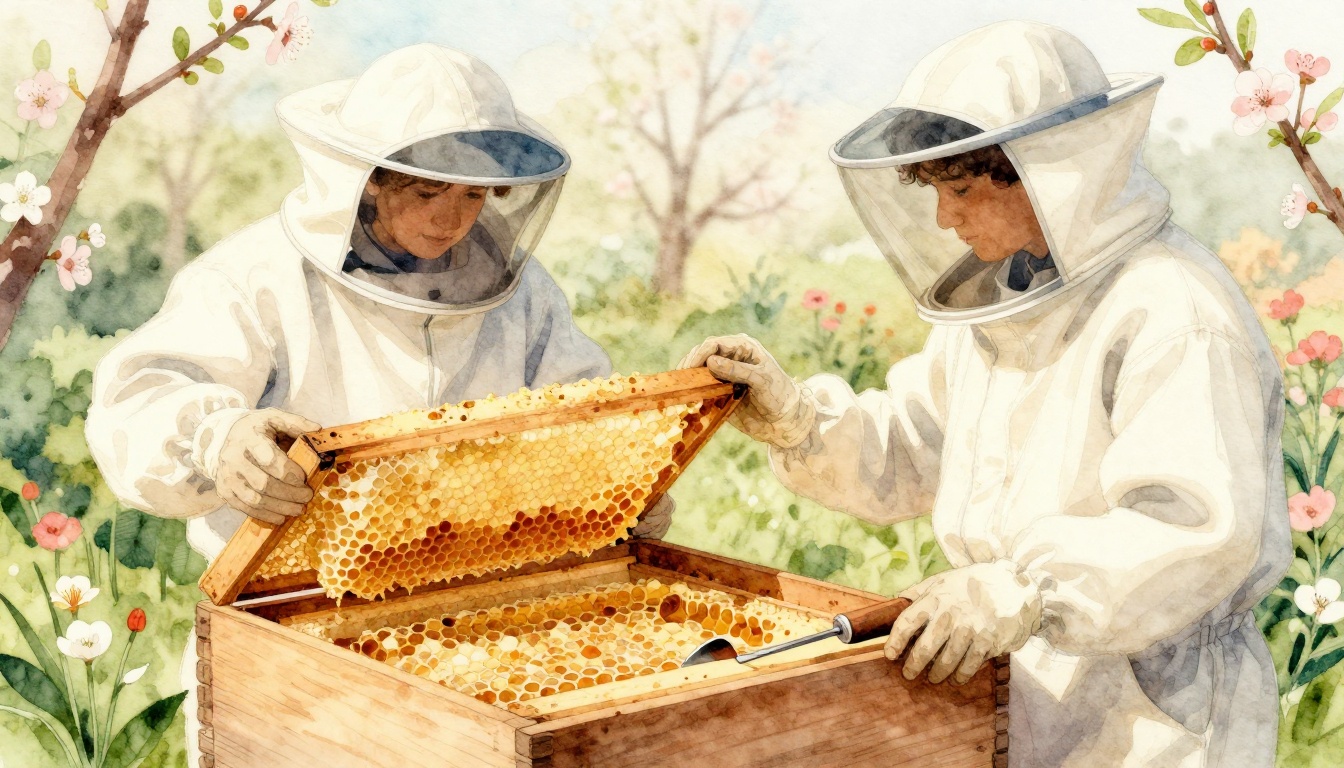
Picture this: Sarah, a new beekeeper, stared at her buzzing hive last spring. She almost lost her colony to starvation because she skipped checking food stores. Luckily, she spotted the signs in time and saved it.
You face the same risks. Routine hive inspections keep colonies strong. They prevent swarms, diseases, and hunger. In this post, you’ll learn prep steps, queen-spotting tips, brood health checks, food assessments, and fixes for problems.
Master these skills. Gain confidence for every routine check. Your bees will thrive.
Gear Up Right: Tools and Timing for Stress-Free Inspections
Start with the right setup. Calm bees make inspections smooth. You avoid stings and stress.
Good gear protects you and the hive. Proper timing lets bees do their work. April 2026 brings spring nectar flows in many US spots. Check then to catch buildup early.
Backyard beekeepers love simple routines. Follow these steps for success.
Essential Tools Every Beekeeper Needs on Hand
Grab a smoker first. Puff cool smoke at the entrance. It masks alarm pheromones, so bees stay relaxed.
Next, pick up your hive tool. Use the flat end to pry frames loose. The hooked end lifts the lid. Leverage gently to avoid bending wood.
A bee brush comes in handy too. Sweep bees off frames with soft strokes. Never squash them. It prevents agitation.
Frame holders grip sides steady. They free your hands for close looks. Full suits or veils shield your face and body.
Budget tip: Starter kits cost under $100. They include basics. Add quality as you grow.
These tools prevent damage. Bees forgive calm hands.
Choose the Best Weather and Time to Open Your Hive
Warm days beat cold ones. Aim for air above 60 degrees F. Bees cluster below that. They can’t regulate brood.
Low wind helps too. Gusts scatter foragers and rile guards. Pick calm afternoons.
Midday works best. Foragers leave then. Fewer bees guard the hive.
Quick checklist before you suit up:
- Sunny skies.
- 65 degrees F or higher.
- Bees flying in and out.
- Light breeze only.
Spring varies by region. Northern states warm slower in April. Southern hives boom earlier. Watch local flows.
Right conditions mean quick checks. Bees stay happy.
Find the Queen Fast: Look for Her Standout Features
Queens stand out if you know where to look. Spot her, and you confirm the hive’s heart beats strong.
She lays eggs daily. Up to 2,000 in peak season. No eggs mean trouble brewing.
Fresh eggs prove she’s active. Marked queens glow with paint dots. Beginners spot them easiest.
Don’t panic if you miss her. Eggs tell the real story. Practice builds speed.
Key Visual Clues That Scream ‘That’s the Queen!’
Size matters first. She’s longer than workers. Abdomen stretches for egg-laying.
Her body shines gold-brown. Workers look duller, fuzzier. Legs tuck close. She walks fast, purposeful.
No pollen baskets on her. Workers carry yellow loads. Wings stay shorter too.
Court bees surround her. They fan pheromones. Drones bulk up fatter, eyes huge. Queens stay sleek.
Compare side by side. Workers hustle. Queen glides.
These clues pop on close frames. Train your eye each check.
Smart Places to Search Frame by Frame
Begin in the lower brood box. Check center frames first. She favors those spots.
Scan horizontally slow. Look edge to edge. Attendants cluster there.
Work from outer frames inward. Set them aside gentle. Crush risk drops.
Skip queen cells if you see them. They signal swarming plans. Smooth cups mean virgins. Peaked ones spell trouble.
Middle frames hold 80% of queens. Patience pays off.
Upper boxes rarely host her. Brood stays low. Mark her next time for repeats.
Inspect Brood Patterns: Eggs to Capped Cells Explained
Brood shows hive health. Eggs mean laying queen. Patterns reveal issues fast.
Healthy brood packs tight ovals. Scattered spots scream poor queen or mites.
Age stages help you gauge. Eggs vanish in three days. Larvae grow quick.
Spot problems early. Treat before they spread.
Spot Every Brood Stage at a Glance
Eggs look like tiny rice grains. They stand upright on end. Pinhole white.
Young larvae curl C-shaped. Workers feed royal jelly. They gleam pearly.
Older larvae angle head down. They fill cells snug. White turns cream.
Capped brood seals flat. Tan bullets smooth. New ones shine. Old perforated let bees chew out.
Count patterns. Full frames mean strong hives. Empty gaps warn you.
Stages cycle every 21 days. Watch progression weekly.
Healthy Patterns vs Red Flags to Watch For
Compact ovals signal good queens. Ages mix even. No big gaps.
Shotgun scatter means failing queen. She skips cells random.
Twisted larvae point to chilled brood. Varroa mites show brown dots.
Chalky mummies mean foulbrood. Watery cells scream starvation.
Smell tells too. Sour odors flag disease. Healthy hives stay sweet.
Note issues. Isolate bad frames. Good patterns build hives.
Check Food Stores: Honey and Pollen for Hive Survival
Food fuels growth. Honey stores energy. Pollen packs protein.
Spring dearth hits hard. Bees burn winter reserves fast.
Estimate stores quick. Feed if low. Starvation kills colonies silent.
Langstroth hives stack supers high. Check top down.
Locate Honey Caps and Pollen Packs Easily
Honey caps white wax seals. They gleam on upper frames. Sweet smell confirms.
Uncapped nectar looks wet. It ripens slow.
Pollen packs colorful arcs. Yellows, oranges bottom brood frames.
Shake frames light. Heavy ones slosh full. Light frames need feed.
Brood box sides hold extras. Supers pack summer bounty.
Visual heft guides you. Practice hones guesses.
Gauge If Your Bees Have Enough to Last
Aim for 40-60 pounds honey in spring. Two full deep frames minimum.
Bees cluster empty comb when low. Hollow thuds on shake.
Mix 1:1 sugar syrup for stimulation. Pollen patties boost brood.
Dearth ends with flows. Feed bridges gaps.
Prevent starvation swarms. Hungry bees abscond.
Heavy hives overwinter best. Check monthly in dearth.
Handle Common Issues and Boost Your Next Check
Problems pop up. Act fast, but calm.
No eggs? Wait a week. Add open brood frame if needed. It spurs queen cells.
Bad brood? Pull frames. Treat varroa with approved strips.
Low stores? Emergency feed now. Syrup in top feeders.
Record everything. Snap photos. Use apps for logs.
Pro beekeepers check weekly in spring. Note weather, stores, brood.
Stuck? Join local clubs. Mentors spot what you miss.
Habits sharpen skills. Hives reward diligence.
Spotting the queen, brood, and food forms your inspection core. Practice cements these pillars. Colonies stay robust.
Head out next sunny day. Check your hive. Share finds in comments below.
Healthy hives yield sweet harvests. Keep buzzing strong.